

Fast rail freight from China to Canada is becoming a preferred logistics option for importers who want stable delivery times, competitive costs, and a smoother alternative to traditional ocean routes. Because global supply chains are shifting quickly, businesses increasingly need mid-speed, mid-cost options that allow them to maintain inventory levels without overspending on air freight. Therefore, multimodal rail freight — which connects China to Europe and then Canada — has emerged as an efficient, predictable, and cost-effective solution for commercial logistics. Moreover, it offers improved tracking, lower carbon emissions, and flexible cargo handling for multiple industries.

Why Is Fast Rail Freight From China to Canada Gaining Popularity?
Because Canadian importers face rising freight costs and unpredictable shipping times, the need for a balanced logistics option has grown dramatically. In addition, fast rail freight from China to Canada provides a middle ground between the slow speed of sea transportation and the high cost of air freight. Therefore, it offers businesses improved planning accuracy, better inventory turnover, and lower supply-chain risk.
Moreover, the multimodal rail system benefits from stable Eurasian rail corridors, modern infrastructure, and more efficient border processes. As a result, importers enjoy consistent transit times, even during peak seasons.
How Fast Is Rail Freight From China to Canada?
Although rail freight cannot match air freight speed, it offers a much faster alternative to ocean shipping — often reducing total travel time by one to two weeks.
Transit Time Comparison Table
| Mode | Estimated Transit Time | Best For |
|---|---|---|
| Air Freight | 5–9 days | Time-sensitive shipments |
| Rail Freight (China → EU → Canada) | 20–28 days | Balanced speed & cost |
| Sea Freight | 30–45 days | Bulk cargo, non-urgent |
Because rail freight follows fixed weekly departures, transit times remain consistent even during high-demand seasons.
How Does Rail Freight Travel From China to Canada?
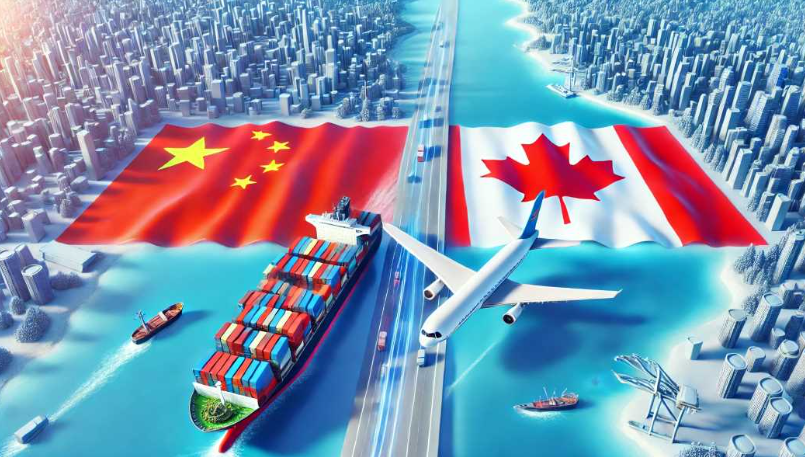
Fast rail freight from China to Canada operates through a multimodal route that connects Eurasian rail corridors with European ports and Canadian inland networks. Although there is no direct China-Canada rail link, the integrated combination of rail, sea, and trucking still creates a stable and efficient supply chain.
Typical Multimodal Route
China → Kazakhstan → Russia → Belarus → Poland → Germany/Netherlands → Ocean Vessel/Transload → Canada
Once in Europe, cargo is transferred to short-sea carriers bound for:
- Vancouver
- Toronto
- Montreal
- Prince Rupert
- Halifax
From there, Canadian national rail systems — including CN and CP — handle the final inland delivery.
In addition, Canadian businesses benefit from fast access to major distribution centers and Amazon FBA warehousing hubs.
What Are the Main Advantages of Fast Rail Freight From China to Canada?
Fast rail freight provides several operational advantages:
- Shorter transit than sea (reducing inventory cycles)
- Lower cost than air (ideal for mid-value goods)
- Stable schedules that reduce planning uncertainty
- Lower carbon emissions than air or truck transport
- Flexible LCL and FCL cargo options
- Reduced damage risk compared with long ocean voyages
- Better tracking visibility along the route
Because businesses increasingly value predictability and sustainability, rail freight has become a strong alternative to conventional shipping.
How Much Does Fast Rail Freight From China to Canada Cost?
Fast rail freight is known for its cost efficiency, especially for medium-volume commercial shipments such as electronics, textiles, machinery, and consumer goods.
Estimated Rail Freight Pricing
| Shipment Type | Typical Cost | Notes |
|---|---|---|
| LCL Rail Freight | $120–$180 per CBM | Ideal for smaller shipments |
| FCL Rail Freight (40ft) | $6,500–$10,000 | Best for high-volume goods |
| Per-kg Rail Rate | $1.8–$3.8/kg | Suitable for palletized cargo |
Additionally, rate fluctuations are generally lower than air freight, allowing importers to forecast expenses more accurately.
Which Chinese Cities Support Fast Rail Freight to Canada?
A wide network of Chinese rail hubs feeds into the Eurasian freight corridor. Because each hub offers unique advantages, importers can choose the most efficient origin point based on supplier location.
Key Departure Cities
- Xi’an
- Wuhan
- Shenzhen
- Chongqing
- Chengdu
- Zhengzhou
- Suzhou
- Yiwu
These hubs provide frequent departures and strong consolidation services, ensuring smooth movement toward Europe.

Which Canadian Destinations Are Common for Rail Freight?
Fast rail freight from China to Canada connects to several major Canadian gateways.
Common Arrival Cities
- Vancouver
- Toronto
- Montreal
- Edmonton
- Calgary
- Winnipeg
From these points, domestic trucking or rail transfers ensure final delivery to warehouses, 3PL centers, and Amazon FBA locations.
What Documents Are Required for Rail Freight to Canada?
Because the route crosses multiple customs jurisdictions, documentation accuracy is essential.
Required Documentation
| Document | Purpose | Origin |
|---|---|---|
| Commercial Invoice | Declares product value | Supplier |
| Packing List | Shows carton & weight details | Supplier |
| Rail Waybill (CIM/SMGS) | Rail transport record | Forwarder |
| Export Declaration | Required for China customs | Forwarder |
| Canadian Customs Entry | Import declaration | Importer |
| Business Number (BN) | Canadian importer ID | Importer |
| Compliance Certificates | For regulated goods | Manufacturer |
Because errors may cause delays, many importers rely on Top China Forwarder for full compliance handling and document verification.
Which Goods Are Best Suited for Fast Rail Freight?
Because rail freight is faster and more secure than sea, but far cheaper than air, it is ideal for mid-value and general commercial cargo.
Best Cargo Types
- Electronics & components
- Apparel and footwear
- Automotive parts
- Household goods
- Industrial machinery
- Consumer products
- E-commerce parcels
- Furniture & home décor
- Toys & gaming accessories
In addition, fragile goods benefit from reduced container movement compared with long ocean voyages.
How Reliable Is Rail Freight When Shipping to Canada?
Rail is one of the most stable international transport modes, especially on the China-Europe corridor.
Reliability Advantages
- Fixed weekly schedules
- Less weather disruption
- Lower congestion risk
- Predictable handling times
- High-accuracy tracking data
- Multimodal integration for continuity
Therefore, businesses gain a more predictable logistics rhythm.
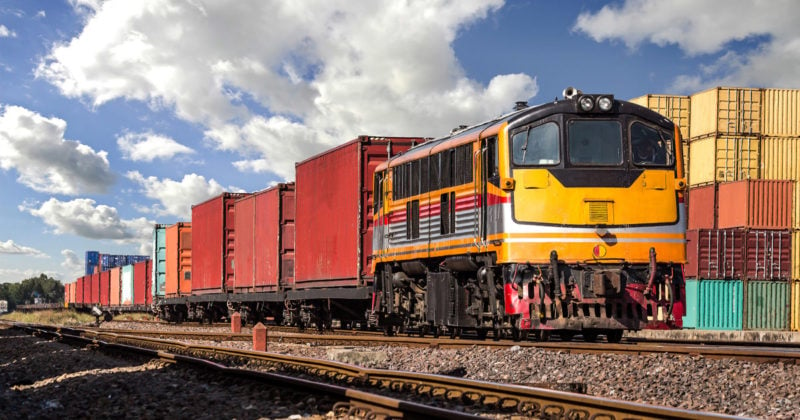
How Does Fast Rail Freight Compare With Air and Sea?
The table below highlights how rail performs against other transport modes:
Rail, Air, and Sea Freight Comparison
| Category | Rail Freight | Air Freight | Sea Freight |
|---|---|---|---|
| Speed | 20–28 days | 5–9 days | 30–45 days |
| Cost | Moderate | High | Low |
| Reliability | High | Very high | Medium |
| Carbon Emissions | Low | Very high | Medium |
| Capacity | Good | Limited | Very high |
| Ideal Use | Balanced needs | Urgent goods | Bulk cargo |
Because rail blends speed and affordability, it is ideal for regular commercial imports.
How to Reduce Fast Rail Freight Costs Even Further?
Canadian businesses can optimize their rail freight budget using smart cost-control strategies:
- Consolidate shipments via LCL programs
- Optimize packaging to lower CBM
- Use rail hubs near supplier factories
- Ship during off-peak seasons
- Book early for better space and pricing
- Use multimodal trucking for quicker final delivery
With Top China Forwarder, many customers achieve 10%–25% savings through optimized planning and route selection.
Conclusion
Fast rail freight from China to Canada delivers predictable transit times, competitive logistics costs, and flexible cargo handling — making it a powerful alternative to sea and air freight. Because rail freight reduces inventory pressure, improves delivery reliability, and offers strong cost savings, it has become a preferred choice for Canadian importers across retail, manufacturing, and e-commerce sectors. Therefore, businesses gain a smoother, more stable supply chain with fewer delays and lower overall costs.
Need a quote?
Ready to get started? Contact us now to request a free shipping quote.
Frequently Asked Questions (FAQ)
How long does fast rail freight take from China to Canada?
Transit usually takes 20–28 days depending on routing and customs.
Can I ship small parcels by rail?
Yes. LCL options allow cartons, pallets, and mixed cargo.
What goods cannot be shipped by rail?
Dangerous goods, flammable items, and restricted chemicals may be prohibited.
Is rail freight reliable during peak seasons?
Yes. Rail avoids port congestion and maintains fixed schedules.
How can I reduce rail freight costs?
Consolidate shipments, optimize packaging, and book early.