

Table of Contents
Managing global shipments requires precision, especially for importers dealing with strict EU requirements. Therefore, reliable China FCL cargo inspection to Sweden ensures your containers move smoothly through export checks, customs controls, and inland handovers without costly delays. Because Swedish ports follow rigorous compliance procedures, professional inspection and predictable documentation workflows make a critical difference for importers seeking both speed and accuracy in their supply chains. With support from partners like Top China Forwarder, businesses gain complete visibility from factory loading to final clearance.

What Is FCL Cargo Inspection for China–Sweden Shipments?
Although the shipping process appears straightforward, FCL cargo inspection involves multiple steps that confirm export legality, safety requirements, and European compliance standards. Therefore, inspections typically include:
- Container structural checks
- Packaging verification
- Commodity compliance reviews
- Weight and measurement accuracy
- Security seal application
- Documentation matching
Moreover, accurate inspection at origin reduces customs delays in Sweden and minimizes the risk of re-inspections or penalties.
Why Is Cargo Inspection Especially Important for Sweden-Bound FCL Containers?
Because Sweden enforces strict EU product rules, cargo inspections must verify:
- Correct CE and conformity marking
- Accurate commodity declarations
- Proper labeling for chemical or textile goods
- Wood packaging certification under ISPM-15
- Compliance with flammability or safety standards
Additionally, Sweden’s clearance process is fast only when documentation is accurate. Therefore, well-prepared inspections prevent your FCL container from entering review queues or physical exams at ports like Gothenburg or Helsingborg.
How Does the China FCL Cargo Inspection Workflow Operate?
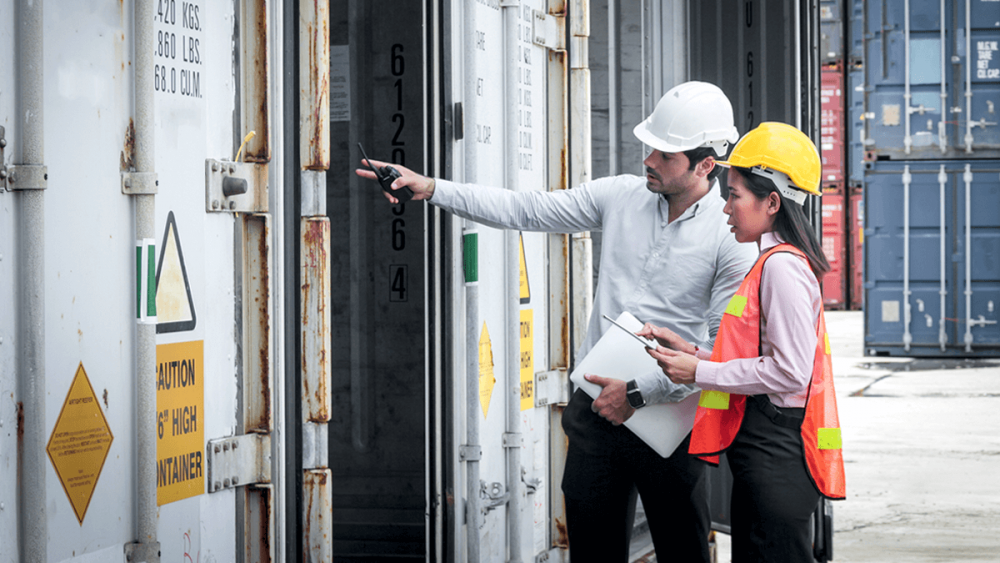
The inspection workflow follows several critical stages. Since delays often occur when these steps are rushed, importers should carefully monitor:
- Factory readiness and production completion
- Container arrival for pre-loading checks
- On-site stuffing supervision
- Seal application and confirmation
- Export declaration and customs release
- Handover to the carrier at terminal
- Vessel loading and departure (ETD)
Furthermore, pairing your shipment with structured sea freight services improves milestone accuracy during each stage of the supply chain.
What Documents Are Needed for Smooth Sweden-Bound FCL Inspection?
Documentation accuracy greatly influences inspection success. Here is a summary table:
| Document | Required For | Notes |
|---|---|---|
| Commercial Invoice | Valuation & customs | Must match HS codes & quantities |
| Packing List | Inspection & loading | Must list dimensions & marks |
| Certificate of Origin | Preferential duty | Required for some product categories |
| CE / Compliance Docs | EU standards | Applies to electronics, toys, textiles |
| ISPM-15 Certificate | Pallets & wood packaging | Mandatory for Sweden |
Additionally, preparing these documents early allows your customs brokerage team to process declarations more efficiently.
How Does Proper Container Stuffing Improve Inspection Results?
Because inspection officers check for safety and compliance, proper container loading directly affects inspection outcomes. Therefore:
- Correct weight distribution ensures safer handling
- Pallet labels help inspectors verify contents quickly
- Organized layout reduces the likelihood of re-opening the container
- Shock-sensitive cargo levels are documented to prevent claims
Moreover, inspection teams often complete checks faster when cargo is clearly arranged and properly separated by category.
What Is the Expected Transit Time for China–Sweden FCL Shipping?
Transit time varies depending on origin and routing. Here is a reference overview:
| Route | Transit Time | Reliability | Remarks |
|---|---|---|---|
| Shanghai → Gothenburg | 30–35 days | High | Frequent weekly sailings |
| Ningbo → Gothenburg | 32–36 days | Medium | Slightly longer due to routing |
| Shenzhen → Helsingborg | 29–34 days | High | Suitable for southern Sweden |
| Qingdao → Gothenburg | 33–38 days | Medium | Good for industrial cargo |
Additionally, pairing reliable transit schedules with structured inspection reduces total lead time from China to Sweden.
Real Inspection Case Studies: China → Sweden
- Cargo: 40HQ consumer electronics
- Inspection Type: Safety compliance + CE verification
- Transit Time: 31 days
- Cost: USD 4,550
- Outcome: Early sample submission + structured documentation → No customs exam in Sweden.
- Cargo: Wooden furniture
- Inspection Type: ISPM-15 pallet certification
- Transit Time: 34 days
- Cost: USD 4,380
- Outcome: Pre-inspection + clean paperwork → Smooth entry, zero storage fees.
- Cargo: Industrial machines
- Inspection Type: Dimensional verification + export declaration
- Transit Time: 35 days
- Cost: USD 4,720
- Outcome: Factory loading supervision improved seal accuracy → Fast customs release.
How Can Importers Avoid Swedish Customs Delays?
Although Sweden’s customs authorities are highly efficient, clearance issues still occur when:
- HTS/HS codes are mismatched
- Packaging regulations are violated
- CE certification is missing
- Shipment values appear inaccurate
- Labels or documentation differ from cargo
Therefore, importers must prepare compliance materials early and follow EU safety standards. Moreover, accurate origin inspection prevents customs from holding your container for further checks.
What Are the Most Common Inspection-Linked Delays?
Even with preparation, delays sometimes happen. The most common include:
- Wrong cargo weight declarations
- Incomplete packing lists
- Disorganized pallet arrangement
- Container seal mismatch
- Misaligned documentation
- Export customs override requests
Fortunately, early verification and pre-loading inspection reduce the likelihood of these issues.
How Does Door-to-Door Coordination Improve Inspection Efficiency?
When shipments use integrated door-to-door logistics, the entire inspection workflow becomes smoother because:
- One team controls pickup, loading, and documentation
- Information is consolidated across departments
- Inspection appointments are pre-coordinated
- Customs release aligns with last-mile delivery
Furthermore, coordinated trucking ensures the container exits the port as soon as inspections and clearance are completed.
Can Air Freight Support FCL Inspection Workflows?
Although the primary mode is sea freight, some importers send samples or urgency-based materials using air freight to complete documentation before the container arrives. Consequently:
- Certification teams get materials early
- Customs compliance is verified in advance
- Delays at Swedish ports are minimized
Additionally, air freight is ideal for complementing bulk sea shipments requiring fast documentation review.
Conclusion
Smooth and reliable China FCL cargo inspection to Sweden depends on early preparation, accurate documentation, and coordinated handling from factory loading to customs release. When inspection workflows are managed correctly, containers move through Swedish ports without unnecessary delays, extra fees, or compliance risks. If you want predictable processing, stronger supply-chain visibility, and a tailored inspection strategy for Sweden-bound shipments, Top China Forwarder can help you manage each step with confidence and efficiency.
Need a quote?
Ready to get started? Contact us now to request a free shipping quote.
Frequently Asked Questions (FAQ)
How early should inspection be booked for China–Sweden FCL shipments?
Inspection should be booked before cargo loading to avoid delays and ensure all documents match customs requirements.
What items require the strictest inspection for Sweden?
Electronics, toys, chemicals, textiles, and products requiring CE certification typically face the closest review.
Can I request additional inspection photos from the loading site?
Yes, most forwarders can provide photos and videos to help confirm packaging stability and container condition.
What happens if the container seal does not match the paperwork?
A mismatch triggers re-inspection or customs hold, so ensuring seal accuracy is essential.
Are re-inspections common at Swedish ports?
They are uncommon when documents are accurate and inspection is completed correctly at origin.