

Trusted Door to Door Delivery from Shenzhen to Canada: Your Ultimate Guide
“Navigating international shipping can be complex, especially when moving goods from Shenzhen, China, to Canada. Businesses often face challenges like customs hurdles, fluctuating freight rates, and lengthy transit times. Fortunately, a trusted door to door delivery from Shenzhen to Canada simplifies this entire process, offering a seamless and efficient solution for your supply chain.”
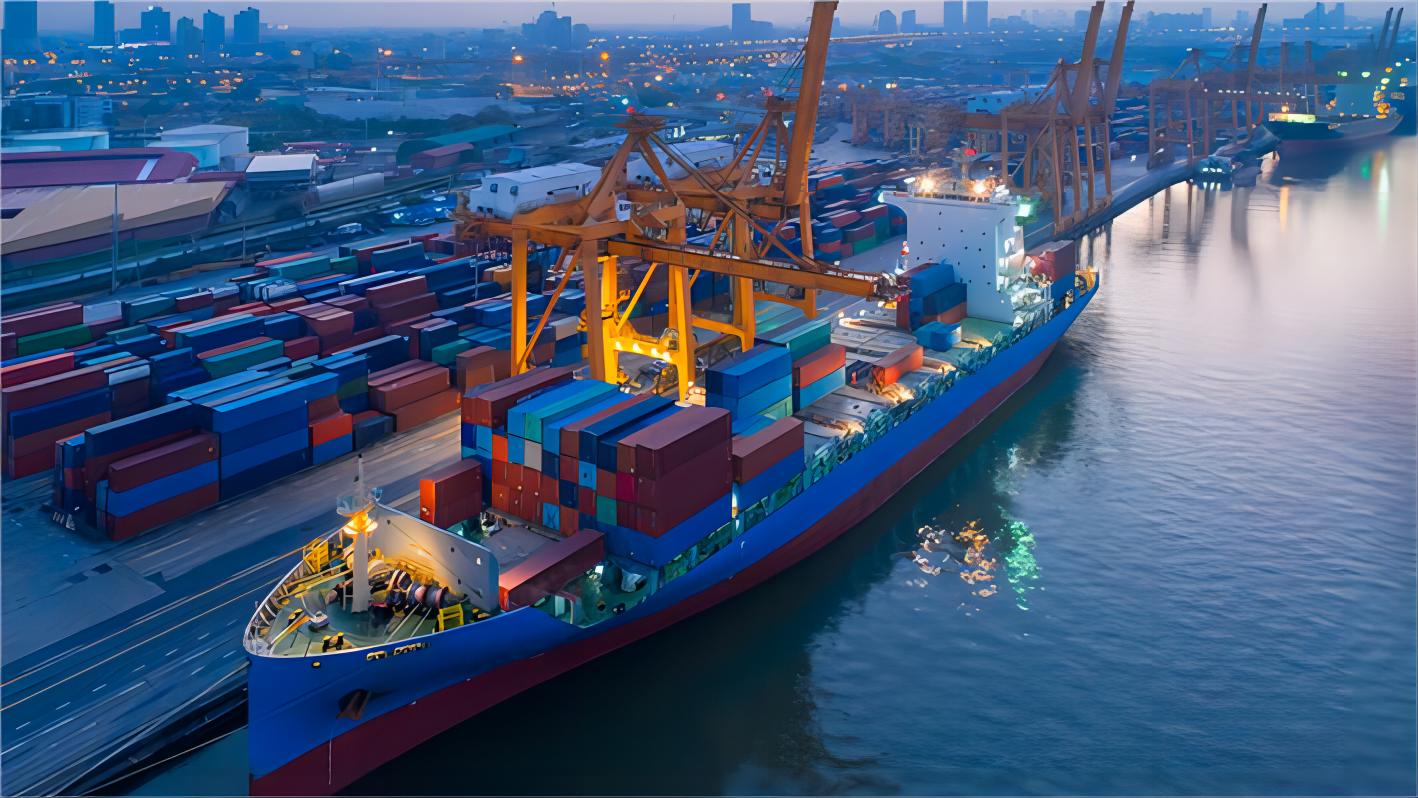
What is Door to Door Delivery and Why is it Essential for Shenzhen-Canada Shipments?
❖Door to door delivery represents a comprehensive shipping service that manages every aspect of your cargo’s journey. Specifically, it covers pickup from your supplier’s location in Shenzhen, all necessary transportation, customs clearance at both origin and destination, and final delivery to your specified address in Canada. This integrated approach minimizes your involvement, thereby reducing stress and potential errors.
Crucially, for businesses importing from China to Canada, this service consolidates multiple logistical steps into a single, streamlined process. Consequently, it eliminates the need for you to coordinate with various carriers, customs brokers, and local delivery services. This end-to-end management ensures a smooth flow of goods, providing predictability and efficiency for your supply chain.
Key Shipping Methods for Door to Door Delivery from Shenzhen to Canada
❖When planning your door to door delivery from Shenzhen to Canada, several primary shipping methods are available. Each option offers distinct advantages in terms of speed, cost, and capacity. Therefore, understanding these differences is vital for making an informed decision that aligns with your business needs and budget.
Furthermore, the choice of shipping method significantly impacts your overall transit time and freight rates. For example, urgent shipments often necessitate faster, albeit more expensive, options. Conversely, less time-sensitive cargo can benefit from more economical solutions. Let’s explore the main methods in detail.
Sea Freight: Cost-Effective for Large Volumes
Sea freight remains the most economical option for shipping large or bulky goods from Shenzhen to Canada. It involves transporting cargo in containers aboard ocean vessels. Typically, this method is ideal for non-urgent shipments, offering significant cost savings for businesses with substantial inventory.
Nevertheless, sea freight has longer transit times, usually ranging from 25 to 45 days, depending on the specific Canadian port and route. You can choose between Full Container Load (FCL) for exclusive container use or Less than Container Load (LCL) for smaller shipments sharing container space. Explore sea freight options for maximum efficiency.
Air Freight: Speed and Reliability for Time-Sensitive Goods
For urgent or high-value shipments, air freight provides unparalleled speed and reliability. Goods are transported by cargo planes, drastically reducing transit times compared to sea freight. Generally, air shipments from Shenzhen to Canada arrive within 3 to 8 days, making it suitable for perishable items, electronics, or products with tight deadlines.
However, air freight is considerably more expensive than sea freight, with costs primarily determined by weight and volume. Despite the higher price, the speed and reduced inventory holding costs can justify the investment for certain businesses. Consider air freight for critical deliveries.
Express Service: Fastest Option for Small Parcels
Express services, often provided by international couriers, offer the fastest door-to-door delivery for smaller packages and documents. These services typically include expedited customs clearance and direct delivery, ensuring your items reach Canada within 1 to 5 business days. This method is ideal for samples, prototypes, or urgent small-volume orders.
Although highly convenient and swift, express service rates are generally the highest per kilogram among all options. Therefore, it is best reserved for shipments where speed is the absolute priority and cargo volume is limited. For example, if you need a quick sample delivery, express service is often the best choice.
Understanding Transit Times and Costs for Shenzhen to Canada
❖Accurately estimating transit times and understanding shipping costs are crucial for effective supply chain management. Transit times can vary significantly based on the chosen shipping method, specific origin and destination ports, and current market conditions. Similarly, freight rates are influenced by numerous factors, including fuel surcharges, peak seasons, and carrier capacity.
Moreover, the final landed cost of your goods includes more than just the freight charge. You must also account for origin charges, destination charges, and crucially, customs duties and taxes. A reliable freight forwarder will provide a transparent breakdown of these costs, ensuring no hidden fees surprise you upon delivery.
| Shipping Method | Typical Transit Time (Days) | Estimated Cost Range (per kg/CBM) | Best For |
|---|---|---|---|
| Sea Freight (FCL) | 25-45 | $3000-5500 per 40HQ container | Large, heavy, non-urgent goods |
| Sea Freight (LCL) | 30-50 | $60-120 per CBM | Smaller, non-urgent shipments (1-15 CBM) |
| Air Freight | 3-8 | $5-10 per kg | Urgent, high-value, time-sensitive goods |
| Express Service | 1-5 | $8-15 per kg | Very urgent, small parcels/documents |
Navigating Customs and Documentation for Canada Imports
❖Customs clearance is a critical, yet often complex, component of international shipping. Successfully importing goods from Shenzhen to Canada requires meticulous attention to documentation and adherence to Canadian Border Services Agency (CBSA) regulations. Any discrepancies or missing paperwork can lead to significant delays and additional costs.
Furthermore, an experienced freight forwarder specializing in customs brokerage can manage this entire process on your behalf. They ensure all declarations are accurate, duties and taxes are correctly calculated, and necessary permits or licenses are in place. This expertise is invaluable for avoiding common pitfalls and ensuring a smooth entry for your goods.
Essential Documents for Import to Canada
To facilitate customs clearance, you will typically need several key documents. These include a Commercial Invoice, Packing List, Bill of Lading (for sea freight) or Air Waybill (for air freight), and a Certificate of Origin. Depending on the nature of your goods, additional permits or licenses may be required, such as those for food products, textiles, or regulated items.
Moreover, accurate Harmonized System (HS) codes are fundamental for proper duty assessment. Misclassifying goods can result in penalties or incorrect duty payments. Therefore, thorough preparation and verification of all documentation are paramount for efficient customs processing.
| Document | Purpose | Key Information |
|---|---|---|
| Commercial Invoice | Valuation for customs, duty calculation | Shipper/Consignee details, HS codes, unit price, total value |
| Packing List | Inventory verification, cargo handling | Contents of each package, weight, dimensions, marks |
| Bill of Lading/Air Waybill | Contract of carriage, title to goods | Carrier details, origin/destination, description of goods, terms |
| Certificate of Origin | Determines eligibility for preferential tariffs | Country of manufacture, producer details |
How Does Door to Door Delivery Compare to Other Shipping Options?
❖Choosing the right shipping solution for your goods from Shenzhen to Canada involves weighing various factors beyond just the basic freight cost. While door to door delivery offers unparalleled convenience, other methods might suit specific business models or shipment characteristics. Therefore, understanding the trade-offs is crucial for optimizing your logistics strategy.
Moreover, comparing different approaches allows you to identify potential cost savings or efficiency gains. For instance, some businesses with in-house logistics capabilities might opt for a port-to-port service. However, for most, the comprehensive nature of door to door remains highly attractive. Let’s examine the main alternatives and their implications.
| Shipping Method | Cost Range (Shenzhen-Canada) | Transit Time | Best For | Limitations |
|---|---|---|---|---|
| Door to Door (Sea) | Starting from $3500 (40HQ), $80/CBM (LCL) | 30-50 days | Convenience, large volumes, less hassle | Higher overall cost than port-to-port, slower |
| Door to Port (Sea) | Starting from $3000 (40HQ), $60/CBM (LCL) | 25-45 days | Businesses with own destination logistics | Requires consignee to handle customs/local delivery |
| Port to Port (Sea) | Starting from $2800 (40HQ), $50/CBM (LCL) | 25-45 days | Experienced importers, very cost-sensitive | Requires managing all logistics at both ends |
| Door to Door (Air) | Starting from $6/kg | 3-8 days | Urgent, high-value, small to medium goods | Highest cost, weight/volume restrictions |
| Door to Airport (Air) | Starting from $5/kg | 3-7 days | Businesses with own airport pickup/customs | Consignee handles destination customs/pickup |
Which Option Should You Choose for Your Shenzhen-Canada Shipments?
❖Deciding on the optimal shipping strategy depends heavily on your specific business priorities and cargo characteristics. There isn’t a one-size-fits-all solution; instead, a tailored approach will yield the best results in terms of cost, speed, and reliability. Consider the following criteria to guide your decision-making process.
Consequently, by carefully evaluating these factors, you can align your logistics choices with your overall business objectives. A reputable freight forwarder can offer personalized advice, helping you navigate the complexities and select the most suitable shipping from China to North America strategy for your unique requirements.
Budget Priority
If cost-effectiveness is your primary concern, especially for large volumes, sea freight is undoubtedly the most economical choice. Opt for LCL if your shipment is under 15 CBM; otherwise, FCL offers better per-unit costs for full containers. However, be prepared for longer transit times.
Alternatively, for smaller budgets with slightly more urgency, a hybrid solution involving sea freight for the main leg and express for the final mile might be considered for specific scenarios, though this is less common for full door-to-door services.
Speed Priority
When speed is paramount, air freight or express service are your go-to options. Air freight suits medium to large urgent shipments, providing a balance between speed and cost for time-sensitive cargo. For very small, highly urgent parcels, express courier services offer the fastest transit.
Moreover, consider the impact of potential delays. While air freight is generally reliable, unexpected factors like weather or customs inspections can still occur. Therefore, building a small buffer into your delivery schedule is always prudent.
Cargo Type Considerations
The nature of your cargo also dictates the best shipping method. Perishable goods, pharmaceuticals, or high-value electronics often require climate-controlled environments or expedited handling, making air freight preferable. In contrast, durable goods like machinery, furniture, or raw materials are well-suited for sea freight.
Furthermore, hazardous materials have specific regulations for both air and sea transport. Always consult with your freight forwarder to ensure compliance and proper handling for such specialized cargo. This prevents costly delays and ensures safety throughout the journey.
Volume Thresholds for Switching Methods
For sea freight, the general guideline is that LCL (Less than Container Load) is more cost-effective for shipments up to approximately 15-20 CBM. Beyond this volume, an FCL (Full Container Load) often becomes more economical. This is because FCL rates are fixed per container, while LCL rates are charged per cubic meter.
Conversely, for air freight, rates are typically calculated by chargeable weight, which is the greater of actual weight or volumetric weight. As cargo volume increases, air freight costs can quickly become prohibitive compared to sea freight. Therefore, evaluate your shipment volume carefully against each method’s pricing structure.
Real-World Case Studies: Trusted Door to Door Delivery from Shenzhen to Canada
❖Examining real-world scenarios illustrates the practical application of door to door services and highlights common challenges and successful outcomes. These case studies demonstrate how different shipping methods and strategies are employed based on specific cargo, urgency, and budget constraints. They offer valuable insights into the complexities of international logistics.
Based on Q3 2024 market rates, these examples reflect typical situations encountered by businesses importing from China to Canada. They underscore the importance of choosing a reliable partner for seamless execution. Note: Freight rates are subject to change based on fuel costs, carrier capacity, and seasonal demand. Contact us for a current quote tailored to your specific shipment.
Case Study 1: E-commerce Retailer’s Urgent Electronics Shipment
| Route | Shenzhen, China Toronto, Canada |
| Cargo | Smartphones & Accessories, 5 CBM, 1500 kg |
| Container | LCL (Air freight equivalent) |
| Shipping Details | |
| – Carrier/Service | Major air cargo carrier |
| – Port of Loading | Shenzhen (SZX) |
| – Port of Discharge | Toronto Pearson (YYZ) |
| – Route Type | Direct flight |
| Cost Breakdown | |
| – Air Freight | $9,000 |
| – Origin Charges (THC, documentation) | $350 |
| – Destination Charges | $400 |
| – Customs & Duties (estimated) | $1,200 |
| – Total Landed Cost | $10,950 |
| Timeline | |
| – Booking to Loading | 2 days |
| – Air Transit | 3 days |
| – Customs Clearance | 1 day |
| – Total Door-to-Door | 6 days |
| Key Insight | Speed was critical for a new product launch. Air freight minimized inventory holding costs and captured early market share, despite higher freight costs. |
Case Study 2: Furniture Importer’s Bulk Order
| Route | Shenzhen, China Vancouver, Canada |
| Cargo | Wooden Furniture, 40 CBM, 8000 kg |
| Container | 1 x 40HQ |
| Shipping Details | |
| – Carrier/Service | COSCO |
| – Port of Loading | Yantian (Shenzhen) |
| – Port of Discharge | Vancouver (VCR) |
| – Route Type | Direct service |
| Cost Breakdown | |
| – Ocean Freight | $4,200 |
| – Origin Charges (THC, documentation) | $500 |
| – Destination Charges | $600 |
| – Customs & Duties (estimated) | $3,500 |
| – Total Landed Cost | $8,800 |
| Timeline | |
| – Booking to Loading | 5 days |
| – Sea Transit | 18 days |
| – Customs Clearance | 3 days |
| – Total Door-to-Door | 28 days |
| Key Insight | Sea freight for a 40HQ offered the best value for bulk, non-urgent goods. Efficient customs brokerage at Vancouver ensured timely release and delivery. |
Case Study 3: Small Business’s LCL Consignment
| Route | Shenzhen, China Montreal, Canada |
| Cargo | Textile Products, 8 CBM, 1200 kg |
| Container | LCL 8 CBM |
| Shipping Details | |
| – Carrier/Service | Major NVOCC (Non-Vessel Operating Common Carrier) |
| – Port of Loading | Shekou (Shenzhen) |
| – Port of Discharge | Montreal (MTL) |
| – Route Type | Transshipment via Busan, Korea |
| Cost Breakdown | |
| – Ocean Freight | $960 (8 CBM x $120/CBM) |
| – Origin Charges (THC, documentation) | $300 |
| – Destination Charges | $450 |
| – Customs & Duties (estimated) | $800 |
| – Total Landed Cost | $2,510 |
| Timeline | |
| – Booking to Loading | 4 days |
| – Sea Transit | 35 days |
| – Customs Clearance | 4 days |
| – Total Door-to-Door | 43 days |
| Key Insight | LCL was the most cost-effective solution for a smaller shipment that didn’t fill a full container. Transparency regarding transshipment time was crucial for planning. |
Achieve Seamless Logistics with Trusted Door to Door Delivery from Shenzhen to Canada
In conclusion, securing a trusted door to door delivery from Shenzhen to Canada is paramount for businesses seeking efficiency, cost-effectiveness, and peace of mind. By entrusting your logistics to an experienced freight forwarder, you can overcome common challenges associated with international shipping, including complex customs procedures and varying transit times. This comprehensive service ensures your goods arrive safely and on schedule, directly to your Canadian destination.
Ultimately, the right shipping partner simplifies your supply chain, allowing you to focus on your core business operations. Whether you prioritize speed, cost, or a balance of both, a tailored door to door solution can significantly enhance your import strategy. Therefore, choose a partner committed to transparency, reliability, and exceptional service for all your cross-border shipping needs.
Ready to streamline your logistics?
Ready to streamline your import process from Shenzhen to Canada? Contact us today for a personalized quote and expert guidance. Our team is dedicated to providing reliable and efficient door to door delivery solutions tailored to your business needs.
Request Quote